
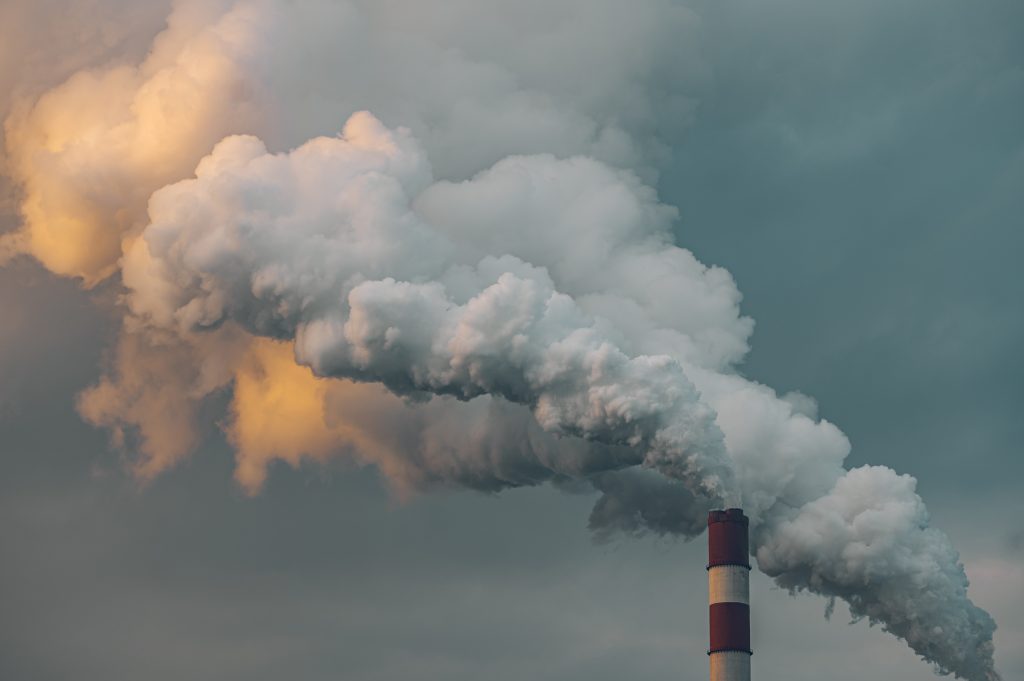
When emissions from an industrial process need to be monitored over time, single measurements are not always sufficient. With continuous emission measurement the concentration of various substances in flue gas and process gases can be monitored continuously, providing information about both emission levels and changes in the process.
A complete system often consists of significantly more than just the system itself. The gas analyzer. The sampling point, the sampling line, gas preparation, analytical instruments, calibration, and collection of measurement data need to work together in order for the result to be representative and reliable.
At PPM Industrial we work with equipment and customized systems for emission measurement and industrial gas analysis.
What is continuous emission measurement?
Continuous emission measurement means that emissions from a process are measured automatically during operation. The system can, for example, monitor the concentration of nitrogen oxides, carbon monoxide, sulfur dioxide, carbon dioxide, oxygen, or organic substances in a flue gas flow.
Internationally, the term is often used CEMS, Continuous Emissions Monitoring System. In Swedish regulations and standards, the term is also used. AMS, automatic measuring system.
Unlike periodic emission measurements, where measurement equipment is used on specific occasions, a continuous system can track the process over a longer period of time. This enables the detection of variations that otherwise risk being missed during a single control measurement.
The Swedish Environmental Protection Agency describes continuous measurements as measurements using a fixed, automated measurement system. Periodic measurements and measurements for calibration and annual verification are separate parts of the emissions monitoring process.
Why is continuous emission measurement used?
The need can come from environmental requirements, the status of the operation, or requirements applicable to a specific type of facility. Continuous measurement can simultaneously provide process information that is useful even outside the formal emissions control.
Ongoing measurement data can be used, for example, to:
- detect changes in emission levels
- track how emissions vary with operation
- checking the functioning of the purification equipment
- identify disturbances or abnormal process conditions
- document emissions over longer periods of time
- follow parameters that affect combustion and energy efficiency.
However, which substances need to be measured and whether continuous measurement is required must be assessed based on the specific facility and the regulations applicable to the business.
For example, EU regulations for medium-sized incineration plants typically rely on periodic measurements, but Member States may require continuous measurement. When continuous systems are used, they must be checked through parallel measurements using reference methods at least once a year in accordance with the directive’s regulations.
This is how a continuous emissions measurement system is built
An emission measurement system can look different depending on the process and the components to be analyzed. In an extractive system, the measurement chain can be described simply as:
Flue gas or process gas → sampling point → sampling line → gas preparation → analyzer → data collection and reporting
Each part affects the final measurement.
1. Sampling point
The first step is to obtain a representative gas sample.
The measurement point needs to be placed so that the gas being analyzed reasonably represents the emissions from the facility. Disturbances in the gas flow, channels, bends, and other components can otherwise affect the measurement.
The location is particularly important when the results are to be used for compliance with emission requirements.
The Swedish Environmental Protection Agency’s guidance on sampling and measurement points describes, among other things, how the design of the measurement site needs to take into account the gas flow and the possibility of conducting both continuous and comparative measurements.
For larger combustion plants, EN 15259 is one of the standards used for strategy, planning, and design of measurement points for emission measurements.
2. The gas is transported to the analysis equipment
In extractive measurement, a sample is taken from the flue gas duct and transported to the analysis equipment.
Here, the actual transport of the gas can become a critical part of the measurement. The temperature can change, moisture can condense, and particles can be carried along with the gas. Furthermore, some gas components can react with or stick to surfaces in the sampling system.
For example, heated sampling tubes are used when the temperature of the gas needs to be maintained to prevent condensation.
PPM Industrial has gas preparation equipment for, among other things, the extraction and transport of process gases, including filters, gas coolers, pumps, flow meters and heated sampling hoses.
3. The gas preparation prepares the sample for analysis
The analyzer needs to receive a gas sample that is within the conditions for which the instrument is designed.
Therefore, the test may need to:
- filtered from particles
- cooled
- warmed up
- pumped
- have their flow regulated
- free from condensation.
Which gas preparation is appropriate depends at the same time on which component is to be analyzed. A solution that works for one gas is not automatically suitable for another.
When measuring water-soluble or reactive components, particular attention must be paid to how the sample preparation can affect the concentration before the sample reaches the analyzer.
PPM's range of products within gas preparation This includes, among other things, gas coolers, filters, gas pumps, condensate pumps, flow meters, and heated sampling hoses.
Pre-processing is therefore not a separate detail aside from the analysis; it is part of the measurement chain itself.
4. The analyzer measures the gas concentration
When the gas sample reaches the analyzer, the concentration of the component or components to be monitored is determined.
Different gases require different measurement principles. Examples are:
NDIR – Non-Dispersive Infrared
It is used, among other things, for continuous analysis of, for example, CO and CO₂.
Chemical luminescence
A common method for the precise analysis of NO and NOx.
Paramagnetic acid measurement
Can be used for continuous determination of O₂.
FID – Flame Ionisation Detector
Used for the measurement of organic hydrocarbons.
FTIR – Fourier Transform Infrared Spectroscopy
Allows the analysis of several gas components simultaneously.
PPM has described more of the principles in the article Different methods for measuring and analyzing gas.
For the actual measurement, there are both portable and stationary gas analysis equipment. Stationary instruments are particularly relevant when the analysis is to be performed automatically and continuously at a specific point in the process. PPM’s range of gas analysis equipment is intended, among other things, for process monitoring and environmental and emissions control.
FTIR when several components need to be analyzed
In some facilities, several gas components need to be monitored simultaneously. In that case, a multi-component technique such as FTIR can be an option.
FTIR is based on the fact that different molecules absorb infrared radiation at characteristic frequencies. Therefore, a single instrument can determine the concentration of several different substances from the same gas sample.
This can be interesting in more complex emissions where, for example, CO, CO₂, NO, NO₂, N₂O, SO₂, HCl or various organic components need to be analyzed.
PPM offers FTIR analyzers for gas analysis. The FTIR equipment available in the range can be used for simultaneous analysis of several gas components and is intended, among other things, for environmental monitoring and process control.
However, which analytical principle is best needs to always be determined based on the substances to be measured, the measurement range, interfering components, and process conditions.
5. Measurement values need to be processed and stored
The analyzer's concentration value is only part of the information in a complete emissions system.
Depending on the requirements that apply, the following parameters may also need to be handled, for example:
- smoke gas flow
- temperature
- pressure
- oxygen content
- water content
- operating time
- status and error signals.
The data can then be used to calculate averages, identify deviations, and document the emissions.
It is also important to distinguish between concentration and amount of emissions. For example, when measuring a gas in ppm or mg/Nm³, the concentration in the gas stream is described. To determine the total amount of emissions, the gas flow must also be taken into account.
In the EU regulations for measurement-based determination of greenhouse gas emissions, for example, emissions are calculated based on continuously measured concentrations together with the flue gas flow.
Automatic measurement requires quality assurance
The fact that an instrument measures continuously does not automatically mean that the measurement value is correct over time.
Instruments can be affected by, among other things:
- Zero-point operation
- span point drive
- temperature
- pressure
- Interferences from other gases
- soiling
- changed gas flow
- wear and tear on components.
Therefore, the measuring system needs to be checked and maintained.
For automatic measurement systems in, among other things, large combustion plants and waste incineration plants, SS-EN 14181 a central standard for quality assurance. The Swedish Environmental Protection Agency describes the standard as the standard that deals with the quality assurance of automatic measurement systems.
In contexts where EN 14181 applies, the terms include: QAL2, QAL3 and AST for calibration, ongoing quality assurance and periodic control. The Swedish Environmental Protection Agency’s guidance for large combustion plants specifies EN 14181 as the standard for these aspects.
The specific quality assurance requirements that apply need to always be assessed based on the current operations and their regulatory framework.
Calibration is part of the life cycle of the measurement system
Even well-selected analytical equipment needs to be checked over time.
Through calibration, the instrument's response is compared with a known reference. This makes it possible to detect and correct changes in the instrument's response.
Therefore, many gas analyzers use certified reference or calibration gases.
PPM provides both calibration gases and accessories and service and calibration of gas equipment.
Therefore, in the case of continuous emission measurement, servicing, calibration and quality assurance should be considered as part of the measurement system already when the plant is being designed, not only when an instrument starts showing anomalous values.
In situ or extra-operative continuous measurement?
Continuous emission measurement can be performed in various ways.
Extractive measurement
In extractive measurement, a representative sample is taken from the flue gas duct. The gas is then transported to the analysis equipment.
The advantage is that the analytical instrument can be placed in a controlled environment and that several types of gas preparation and analytical instruments can be combined.
At the same time, the sampling system becomes an important part of the measurement. The composition of the gas must not be changed in a way that affects the result.
In situ measurement
In situ measurement involves the analysis being performed directly in or above the flue gas duct.
This reduces the need to transport the gas sample itself. The technology can therefore be suitable for certain components and applications.
Which principle is most suitable depends, among other things, on the gas component, temperature, particle level, moisture content, the design of the channel and the requirements that are imposed on the measurement.
Continuous measurement also provides information about the process.
One advantage of continuous emission measurement is that the emission values can be linked to how the facility is operated.
For example, if CO suddenly increases while O₂ changes, this can provide information about the combustion conditions. Similarly, changes in NOx can provide information about how different operating conditions affect emissions formation.
Therefore, continuous data can be used for more than just reporting. It can also provide the basis for process optimization, troubleshooting, and the control of purification equipment.
At the same time, it is important that the emission system is designed for this very purpose. The choice of measurement point, response time, and measurement principle determines how quickly and clearly changes in the process can be detected.
When is a customized measurement system needed?
In simpler applications, a single stationary analyzer may be sufficient.
However, for more complex emission measurements, several components need to be assembled into a complete system. This may include, for example:
sampling probe → heated sample line → filter → gas heater → pump → flow control → multiple analyzers → calibration system → control and data collection.
The selection of components must then be based on the current process and the gases to be analyzed.
PPM works with Customized systems for gas analysis when standardized instrument solutions are not sufficient for the application.
What should be considered when choosing a system?
A continuous emissions measurement system should not start with the question of which analyzer to buy. The starting point should be the measurement task itself.
It is especially important to determine:
- which substances are to be analyzed
- expected concentrations
- gas composition and possible interferences
- temperature and humidity
- presence of particulate matter
- requirements for response time
- Requirements for accessibility and redundancy
- what rules and standards the measurement is subject to
- How data should be stored and used
- what requirements there are regarding service and quality assurance.
Once these conditions are known, it is possible to select appropriate sampling, gas preparation, and gas analysis equipment.
Complete solutions for continuous emission measurement
A reliable continuous emissions measurement system relies on the entire measurement chain working together. An advanced analyzer has limited value if the gas sample changes on its way to the instrument, if the measurement point is not representative, or if the system is not regularly checked and calibrated.
At PPM Industrial we work with instruments, gas preparation, and customized solutions for industrial gas analysis and emissions measurement. Based on the gases to be analyzed and the conditions in the process, we can help develop a solution from sampling to a finished measurement system.