
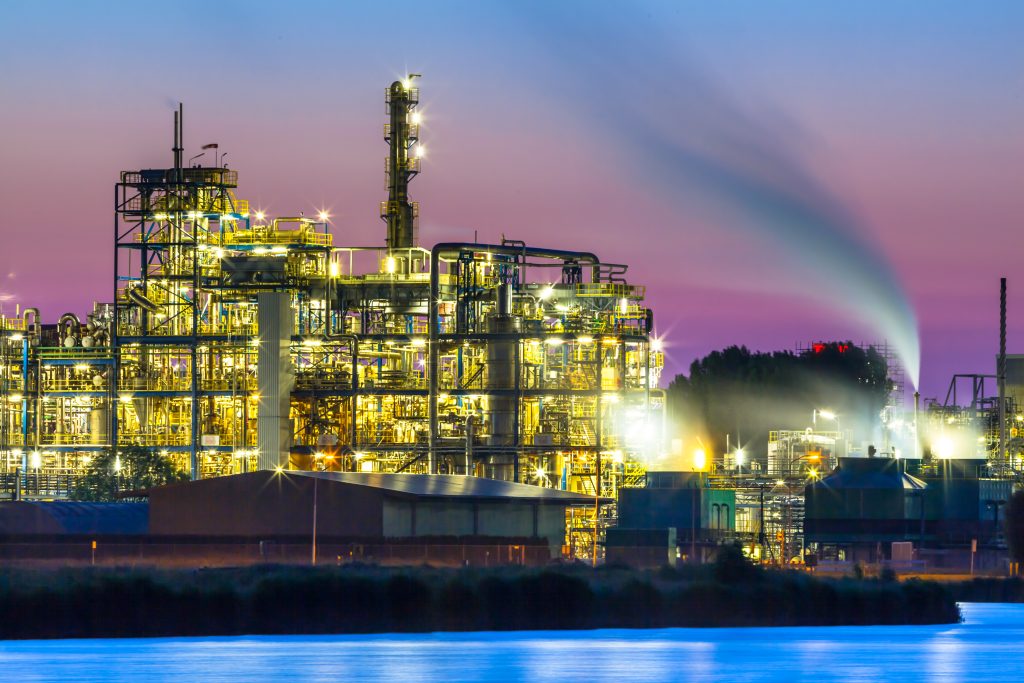
A gas leak does not have to be large to cause problems. Small or recurring emissions can be difficult to detect in a single measurement, especially if the concentration varies with production, ventilation, temperature, or time of day.
With one logger system for leak monitoring Instead, the gas concentration can be recorded continuously. This provides a clearer picture of when and where deviations occur and makes it possible to track the development over a longer period of time.
At PPM Industrial we work with both standalone gas loggers and more complete systems for continuous gas monitoring. Which solution is best depends on the gas, the environment, and whether the need is for temporary mapping or permanent monitoring.
What does a logger system do?
A gas logger combines a gas sensor with data storage. The instrument is placed at the point to be monitored and records the gas concentration at specified intervals.
Unlike a conventional point measurement, one thus not only learns what concentration there is at the moment, without how the level changes over hours, days or longer periods.
It could, for example, show:
- at what times the gas concentration increases
- if a leak occurs during a specific process
- what are the high peak concentrations
- How long do elevated levels persist
- whether the implemented measures have actually had an effect
This makes logging useful both for troubleshooting and as a basis for more long-term measures.
OdaLog L2 – gas logger for longer measurements
One of the solutions in PPM Industrial's range is OdaLog L2, an independent logger developed for continuous gas measurement.
The system is primarily intended for hydrogen sulfide, H₂S, However, specifications are also available for the performance of substances such as carbon monoxide, sulfur dioxide, nitrogen monoxide, nitrogen dioxide, chlorine, hydrogen cyanide, and ammonia.
For hydrogen sulfide, there are various measurement ranges up to 2,000 ppm, which allows the equipment to be adapted to the type of environment to be investigated. It is also available as a Long Term Logger for longer measurement periods.
The measurement data is collected and analyzed using the software OdaStat-G, This allows for the study of variations and the identification of recurring patterns in gas levels. The instrument is also IP66/68-rated and comes with ATEX and IECEx certification for use in classified environments.
This makes this type of logger particularly useful, for example in wastewater systems, sewage treatment plants, the process industry and other environments where gas levels need to be monitored over an extended period.
When several measuring points need to be monitored
In larger facilities, a standalone logger is not always sufficient. In that case, several gas detectors may need to be placed around a process, a work area, or a temporary work site.
An example is MSA ALTAIR io360, which PPM Industrial offers for wireless gas monitoring. The units can measure combustible gases, oxygen, carbon monoxide and hydrogen sulfide and communicate wirelessly with a hub. The system can forward data for central monitoring and also store measurement, event and calibration data locally.
This means that several measurement points can be monitored as a coherent system instead of as separate instruments.
This type of solution is particularly interesting in situations such as:
- maintenance stops and audit work
- temporary work areas
- process plants
- thoughts and closed spaces
- areas where fixed detectors have not yet been installed
Permanent monitoring requires a systems perspective
For permanent gas detection, the solution usually consists of more than just the sensor itself. Gas detectors need to be combined with control units, signal transmission, and functions for alarms or communication with higher-level control systems.
PPM Industrials' product range includes, for example: MSA S5000, The gas detector is a stationary gas detector that can be used for, among other things, flammable gases, H₂S, CO, CO₂, NH₃, Cl₂, SO₂, NO₂, hydrogen gas and oxygen. It can communicate via, among other things, 4–20 mA, HART and Modbus.
Central offices like MX 32 It can simultaneously collect signals from several detectors and transmit the data to, for example, data loggers, PLCs or property monitoring systems.
This means that a leak monitoring solution can be built from a single measurement point to a larger system where several parts of the facility are monitored simultaneously.
The right system starts with the right gas
The most important question when sizing a logger system is which gas to detect. Different gases require different sensor technology, and there are significant differences in the concentrations that are relevant to measure.
The location is also crucial. The density of the gas, ventilation, possible leakage points, and airflow all affect where the sensors should be mounted.
Therefore, the choice should not be based solely on a specific product. The sensor, measuring range, number of measuring points, communication and logging need to be seen as parts of the same system.
From instrument to complete solution
At PPM Industrial, we work beyond the delivery of individual gas detectors. More complex tasks in gas analysis and gas monitoring are carried out as projects where the right instrumentation and system solution are adapted to the business. PPM also offers service, calibration, and instrument control.
The need can therefore be anything from one standalone logs to map a suspected leak to a permanent system with multiple gas detectors, central data collection, and alarm functions.
For businesses where gas levels vary over time, logger systems provide an important advantage: instead of a snapshot, you get measurement data that shows what actually happens in the facility over time. This provides a significantly better basis for both troubleshooting, risk assessment and preventive measures.